
Opinion - Disagreement isn't a licence to degrade
This week, we witnessed disturbing instances of online abuse targeting Racing Minister Jane Howlett. Sadly, this treatment is not isolated to a single policy decision or reserved for just state politicians; it's part of a growing pattern of hostility.
Tasmanian councils report harrowing stories of elected representatives being harassed online and even confronted in the supermarket or their own driveway.
By accepted standards of decency, this treatment should not be tolerated in any workplace.
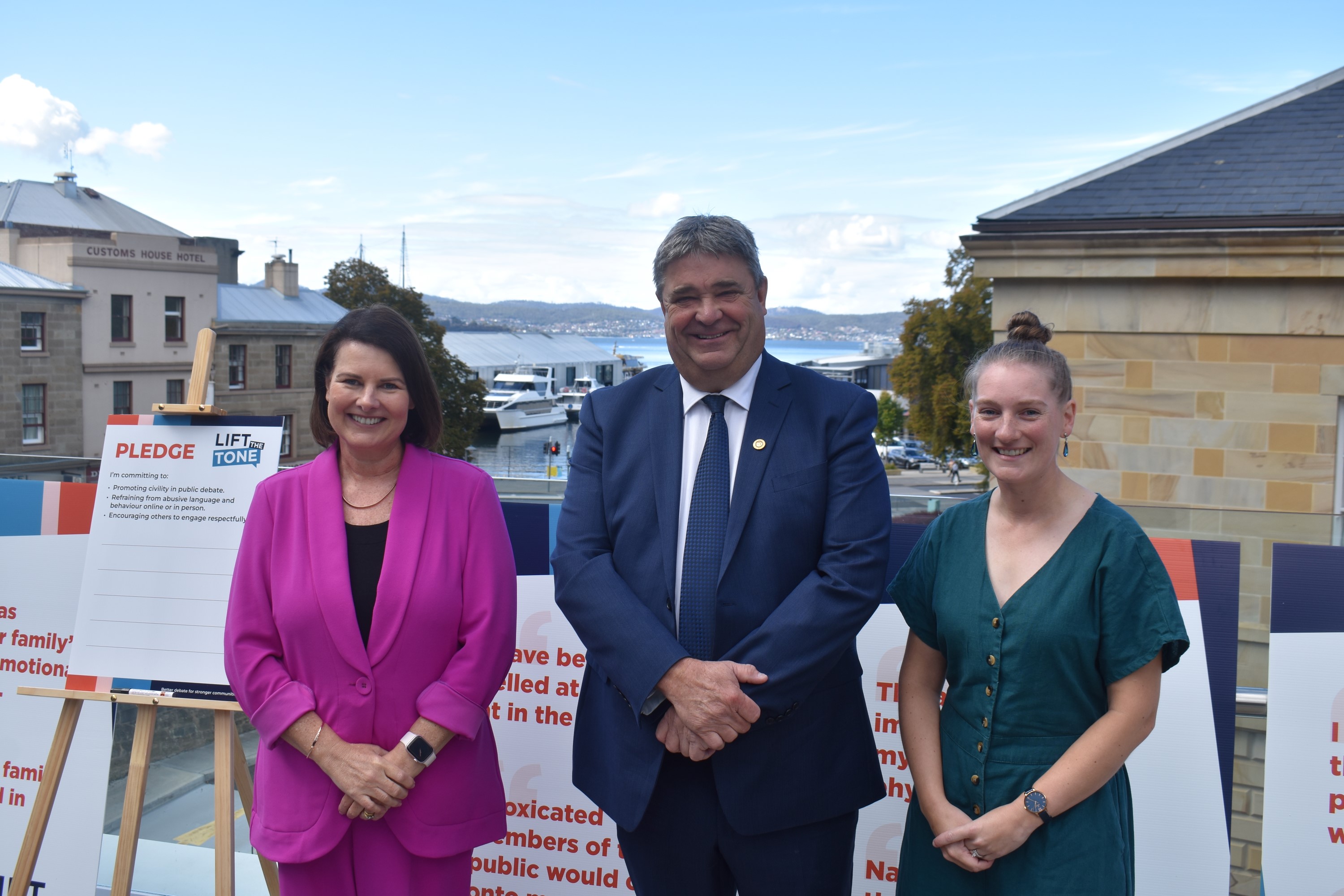
In response, the Local Government Association of Tasmania launched " Lift the Tone" earlier this year, a campaign aimed at improving the standard of public debate. It followed a survey of councillors, which found that 80 per cent had experienced abuse from members of the community in the past two years.
While this abuse was most commonly via social media (47 per cent), in extreme cases, some received death threats or were followed home in their vehicle. Concerningly, over one-third of councillors said they felt at risk in their role.
Imagine not feeling safe when you are just doing your job.
While we've received messages of support for the campaign, it has also prompted many individuals to deflect responsibility or even double down on abuse, claiming councillors
brought it on themselves and deserved it.
This reflects a broader, troubling trend in public debates, where frustration with institutions is expressed through personal attacks rather than constructive engagement. Social media, with its anonymity, has more frequent and intense.
To be clear, this is not about discouraging public debate. There will always be issues and decisions on which we disagree, and expressing our views is an essential part of democracy.
But we must recognise that we can disagree without disrespect.
This abuse not only harms the wellbeing of those serving the community but also discourages people from running for elected office. In our survey, 50 per cent of councillors who said that they would not seek re-election made that decision because of the abuse they'd experienced.
We all want to attract the most capable and engaged people on to councils. But right now, why would anyone consider putting up their hand, knowing there's an 80 per cent chance they'll face abuse for the privilege?
LGAT believes this is a serious issue. If the public can't focus on the issues instead of the person when discussing policies, we'll struggle to attract people with the skills and integrity to act in our collective best interests.
Having the ability to hide behind a keyboard doesn't make it right, and ultimately, we'll all be worse off for it.
My plea to everyone, but especially those who comment online, is to pause and ask yourself: Is this kind?
Would you see the comments as acceptable if they were directed to one of your family members?
Importantly, if you see abusive, hurtful or personal remarks don't turn a blind eye. Call them out.
We cannot allow abuse against elected representatives to undermine our community and our democracy.
We all have a responsibility to Lift the Tone.
Paula Wriedt, LGAT vice president and Kingborough Council mayor
As published in The Mercury on 15 September 2025.