

In September 2024, we asked elected representatives to share their experiences of community interactions with us.
The survey aimed to seek a better understanding of the abuse, intimidation or bullying behaviour elected representatives may be experiencing from community members as they undertake their role.
We heard from a wide range of elected representatives across all three regions.
Elected representative experiences
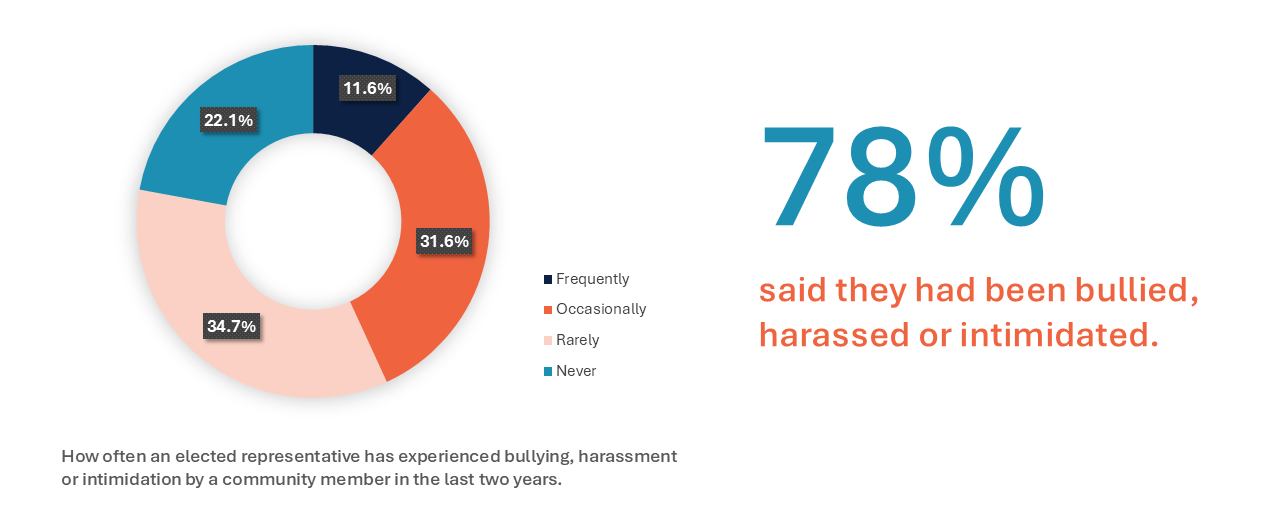
When surveyed about their experiences over the past two years, 78% of elected representatives reported facing abuse, harassment, or intimidation from community members. This was a frequent occurrence for 11.6% of survey respondents.
We asked elected representatives to share where their experiences of abuse, bullying or intimidation had taken place. As expected, the most common response was social media (47.3%), followed by verbally in public (36.8%).
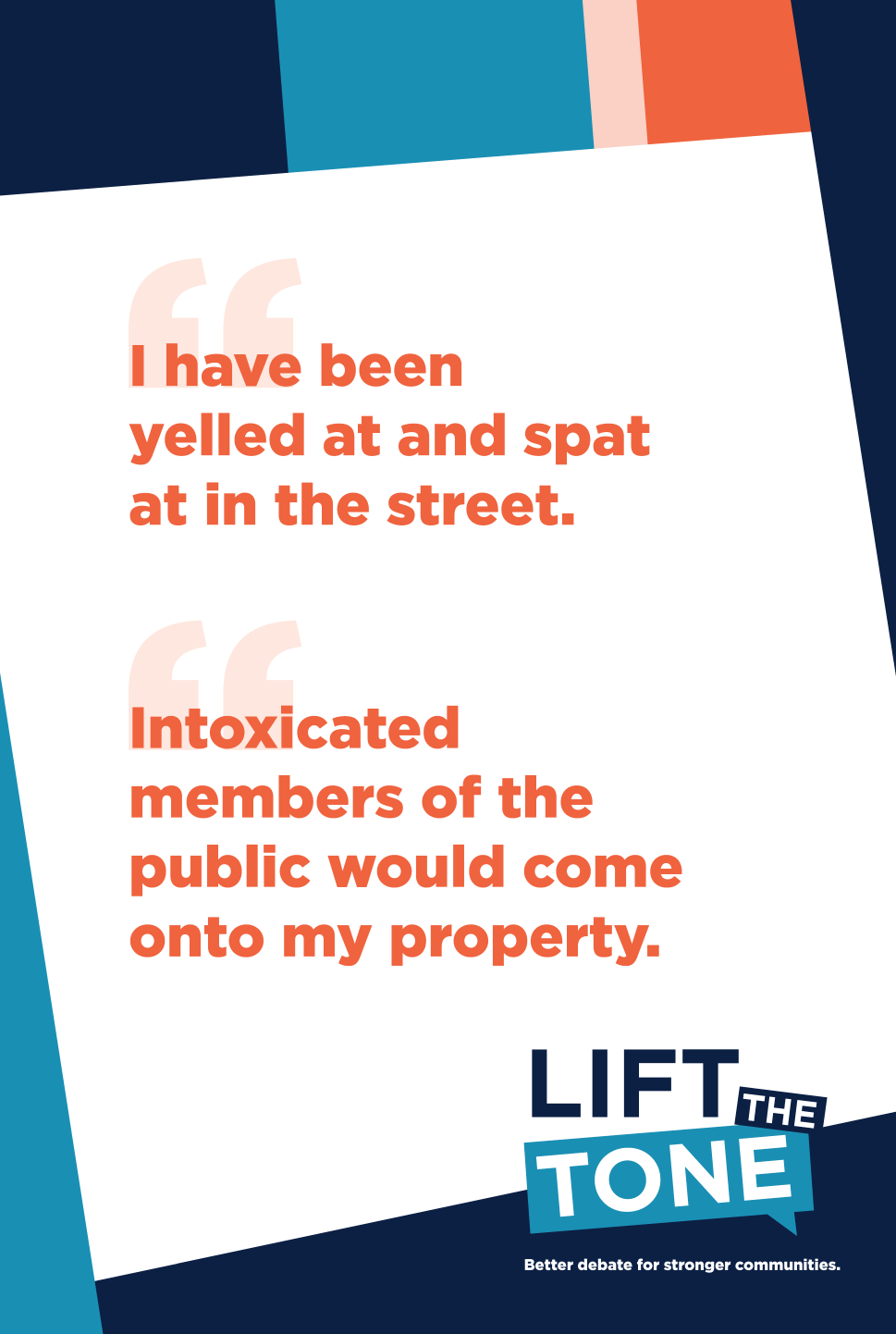
Respondents also identified that they had experienced toxic behaviour via telephone calls, letterbox drops, print media, and during planning application hearings. Some had also experienced physical abuse from a ratepayer and had been approached on their own property. In one case, police were involved in response to a threat.

The majority of respondents identified differences of opinion (59%) and planning decisions (50%) as the main triggers for this type of behaviour. Council policies and fees were also considered to elicit toxic behaviour by members of the public.
Impact
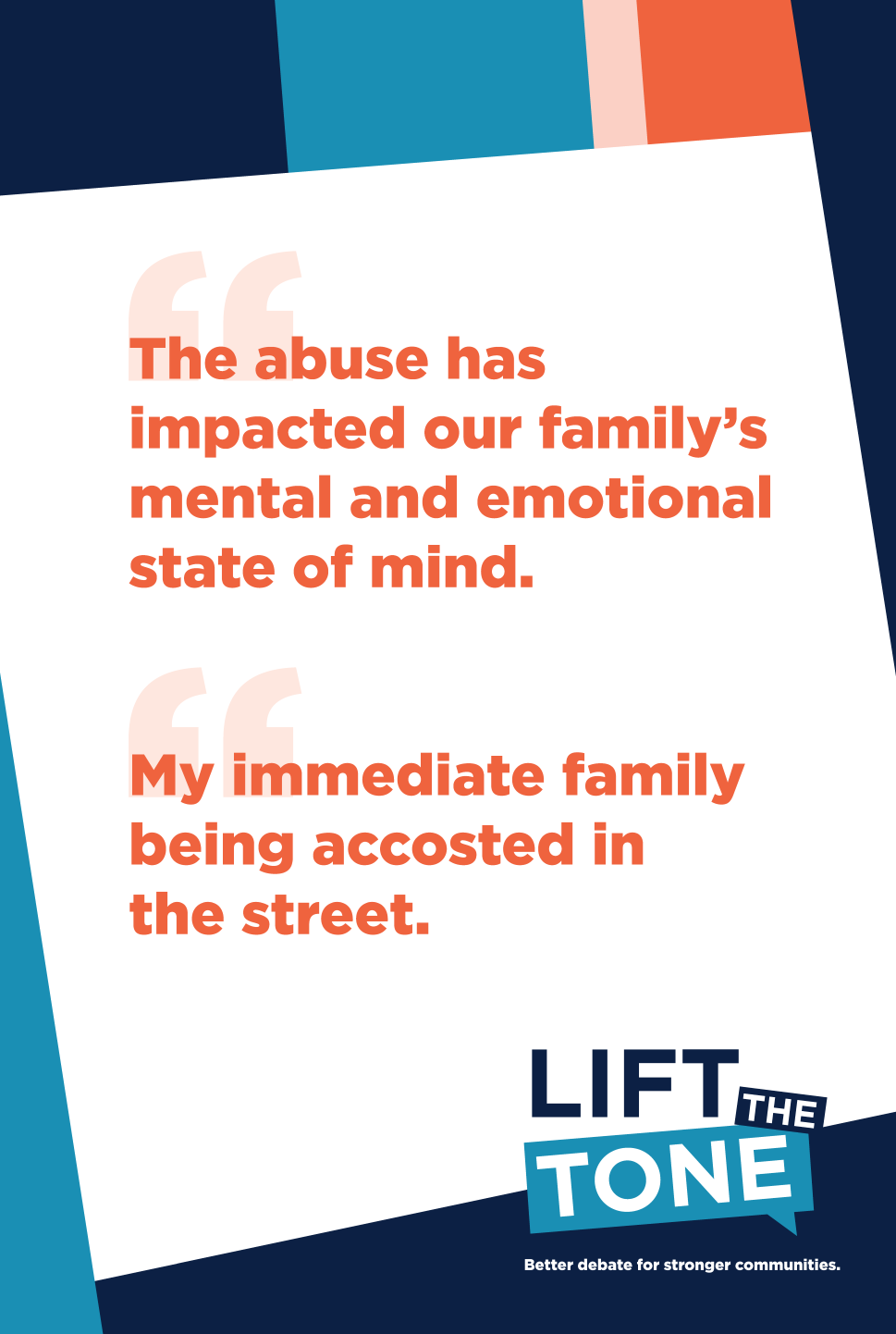
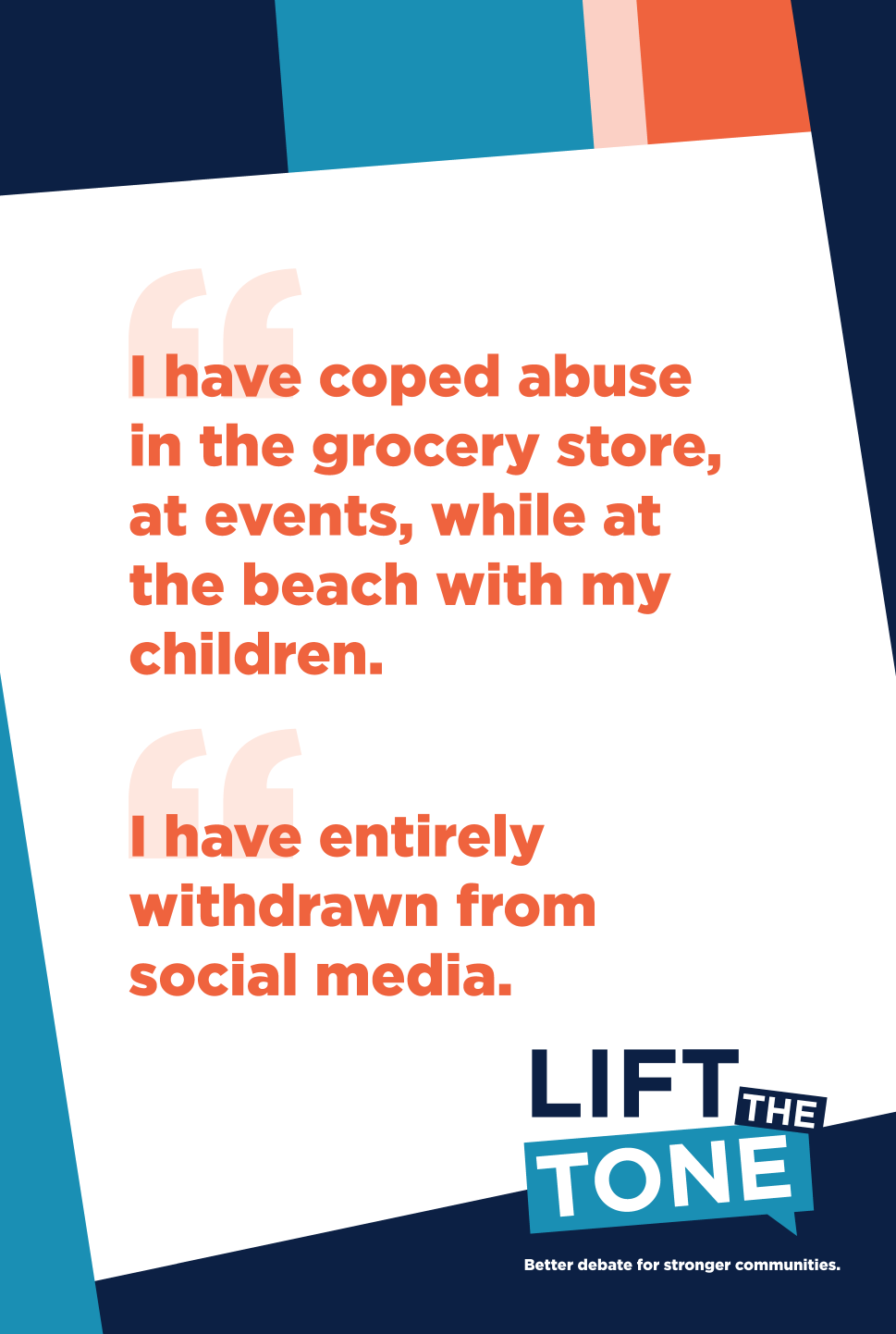
We asked elected representatives to share how abuse, intimidation and harassment has impacted them. Many respondents indicated that they avoid social media completely or choose to have limited interaction, including allowing others to run their social media accounts to reduce their own exposure to abuse and bullying. The survey also identified that many family members of elected representatives find these interactions distressing. In extreme circumstances, respondents noted that they had received death threats, been followed in their vehicle, sought counselling, and installed extra security at their homes.
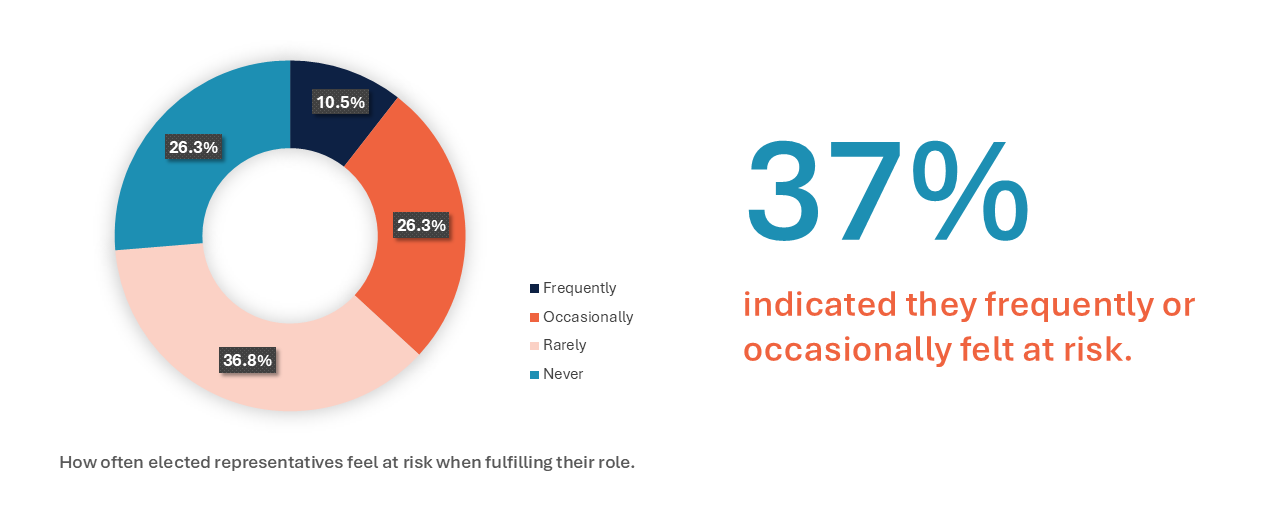
Many elected representatives also identified feeling at risk when undertaking the duties of the role.
When asked whether they planned on standing for re-election in 2026, 40% of survey respondents said they would, with a similar amount (39%) still considering the option. The 21% of respondents who indicated that they would not stand for election in 2026 were asked to share the reason for this decision. Almost half of these respondents indicated that this was due to the toxic behaviour they had experienced from community members. Some undecided respondents said the experience of abuse and stress would be a factor when it came time to nominate.
What can we do about this
Elected representatives are imbedded in their local communities and provide an essential connection between the council and residents. The community has a right to scrutinise and challenge decisions made by our elected representatives as part of a healthy democracy. However, when comments and actions shift from honest and respectful debate to abuse and intimidation, they become harmful. This unconstructive behaviour negatively affects democracy and discourages people from standing for elected office.
That is why we are asking for a commitment to:
- Promote civility in public debate.
- Refrain from abusive language and behaviour online or in person.
- Encourage others to engage respectfully.
Sign the pledge and support respectful debate that will build stronger communities.